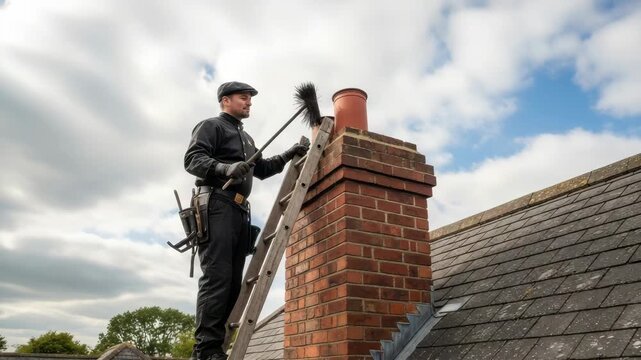
Plano gets long, hot summers, which means most fireplaces here sit unused for the better part of the year. When the weather finally cools down, that’s when homeowners start thinking about their chimney again and it’s exactly the right time to get it checked.
We typically see the most bookings in November and December, as people get ready for the season. By January and February, once temperatures drop further, demand hits its peak.
What We Usually Find During Winter Checkups
During these winter checkups, the most common things we come across are squirrel nests, built-up dust, and leaves that have blown in from nearby trees over the months the chimney sat idle. None of these are unusual, but they do need to be cleared out before the fireplace gets used again. Otherwise they can interfere with airflow right from the first fire of the season.
Why Creosote Buildup Is the Bigger Concern
Beyond the seasonal debris, the real risk builds up gradually every time wood burns. It starts as a light, flaky layer inside the flue. Left alone, that layer hardens over repeated use into a thicker, tar-like coating, and eventually into a dense, glossy buildup that’s much harder and more dangerous to deal with. The longer creosote sits untouched, the more flammable it becomes, which is exactly why an annual check matters even for a chimney that only sees a few months of use.
It’s Also About the Air Inside Your Home
A blocked or poorly maintained chimney does not just affect the fireplace itself. When airflow is restricted, smoke and combustion gases can find their way back into the living space instead of venting outside. That includes carbon monoxide, which does not have a smell or color and can cause symptoms as mild as a headache or as serious as confusion and nausea at higher levels. A proper chimney inspection is what catches this before it becomes a health issue rather than just a maintenance one.
What Happens If You Skip It
Without a proper annual checkup, these small issues can turn into serious problems. Creosote can build up unnoticed, chimney walls can start to deteriorate, and blockages can force smoke back into the home instead of venting it out properly. It can also make it harder to get a fire burning properly in the first place. Over time, ignoring these issues tends to cost more than the checkup ever would have a small crack caught early is a quick fix, while the same crack left alone can turn into a waterproofing problem or a bigger structural repair.
How Often Should You Get Your Chimney Cleaned?
Whether you have a wood-burning or gas fireplace, we recommend getting it cleaned and inspected at least once a year. Even gas fireplaces, which produce far less buildup than wood, still benefit from an annual check to make sure everything is venting properly and running safely.
Signs It’s Time to Get Your Chimney Checked
- A smoky smell coming from the fireplace even when it’s not in use
- Difficulty getting a fire to catch or stay lit
- Smoke drifting into the room instead of going up the flue
- Visible soot buildup around the fireplace opening
If you see any of these signs, your chimney needs attention before the season really sets in.
Why Regular Chimney Maintenance Matters:
- Prevents fire hazards caused by creosote buildup
- Improves airflow and fireplace efficiency
- Extends chimney lifespan
- Reduces costly future repairs
- Ensures safe indoor air quality
If it’s been a while since your chimney was last inspected, before winter sets in the best time to get it looked at. If you are looking for reliable services, Chimney Solutions Plano provides expert chimney cleaning, inspection, and repair services designed to keep your home protected and your fireplace running smoothly. Contact Chimney Solutions Plano today for professional chimney sweep services in Plano TX.